Why Multi-Layer Plywood Core Resists Palm’s Humidity Better Than Solid Wood
Multi-layer plywood core engineered wood performs significantly better than solid wood in humid coastal environments such as Palm Jumeirah because of its cross-laminated structure. Unlike solid timber, which expands and contracts along the grain direction, plywood layers are bonded in alternating orientations. This cross-grain construction stabilizes the board and minimizes dimensional movement caused by moisture fluctuations and air-conditioning cycles.
In beachfront villas, humidity levels can shift rapidly between indoor cooling systems and outdoor salty air exposure. Solid wood reacts aggressively to these changes, often leading to cupping, warping, or joint separation. In contrast, multi-layer plywood cores distribute stress evenly across layers, reducing the likelihood of visible deformation.
This structural stability is especially important for wide plank engineered flooring where surface tension is higher. The result is improved long-term performance, reduced maintenance, and better compatibility with large-format luxury installations common in Palm villas. When combined with proper acclimation and sealing, multi-layer engineered wood becomes one of the most reliable flooring systems for coastal Dubai environments.
Top Veneer Thickness: How Many Refinishes Possible for Longevity
The top veneer layer in engineered wood flooring directly determines how many times a floor can be sanded and refinished during its lifespan. In luxury coastal homes such as those in Palm Jumeirah, this factor becomes critical because salt air, sunlight exposure, and heavy use in entertainment areas accelerate surface wear over time.
A thicker wear layer—typically 3mm to 6mm—allows multiple refinishing cycles, while thinner veneers may only allow light screening or one full sanding. Each refinishing process removes a thin portion of the wood surface to eliminate scratches, discoloration, and wear patterns. Therefore, selecting a thicker veneer increases long-term value and extends the lifecycle of the flooring system.
However, refinishing capacity is not the only consideration. The quality of the wood species, stability of the core, and type of factory finish also influence durability. Premium oak and walnut veneers tend to respond better to sanding than softer species. For villas expecting long-term ownership or high resale value, investing in a thicker veneer ensures the floor can be refreshed multiple times without replacement.
UV-Cured Oils vs Aluminum Oxide for Salt Air Protection
In coastal environments like Palm Jumeirah, surface protection is essential due to salt-laden humidity and strong UV exposure. Two common finishing technologies—UV-cured oils and aluminum oxide coatings—offer different performance characteristics.
UV-cured oil finishes penetrate the wood surface, enhancing natural texture and allowing easier spot repair. They provide a matte, natural aesthetic that is highly desirable in luxury interiors. However, they require more frequent maintenance and periodic re-oiling to maintain protection, especially in high-exposure zones near terraces and glass façades.
Aluminum oxide coatings, on the other hand, form a highly durable protective layer on the surface of engineered wood planks. This layer offers superior scratch resistance and longer-lasting protection against abrasion and UV-related fading. It is particularly effective in high-traffic areas such as hallways and living rooms.
While UV oils offer better repair flexibility, aluminum oxide systems provide stronger long-term resistance in harsh coastal conditions. The choice depends on whether the priority is natural aesthetics and repairability or maximum durability and minimal maintenance.
Floating vs Glue-Down Engineered Wood for Frond Beachfront Properties
Engineered wood flooring can be installed using floating or glue-down methods, each offering distinct advantages for beachfront villas in Palm Jumeirah.
Floating installations allow planks to sit over an underlayment without being fixed to the subfloor. This method accommodates natural expansion and contraction caused by humidity changes, making it easier to install and replace. It also improves acoustic performance when combined with sound-reducing underlays.
Glue-down installation, however, bonds the flooring directly to the concrete slab. This creates a more solid feel underfoot and reduces movement, which can be beneficial in large-format plank designs or high-traffic areas. It also improves heat transfer in homes with underfloor cooling systems.
In coastal villas, glue-down systems often provide better long-term stability, especially in areas exposed to temperature fluctuations and sliding glass door zones. Floating systems are more forgiving but may produce slight movement noise over time if not properly installed. The decision depends on structural conditions, acoustic requirements, and expected usage intensity.
Acoustic Underlayment Requirements for Palm Villa Bedrooms
Bedrooms in luxury villas located in Palm Jumeirah require careful acoustic planning due to multi-level layouts, hard flooring surfaces, and open architectural designs.
Acoustic underlayments are designed to reduce impact noise such as footsteps, furniture movement, and vibration transfer between floors. In engineered wood systems, underlayment selection can significantly influence sound comfort levels, especially in upper-floor bedrooms above living spaces.
High-density rubber underlays generally provide the best performance because they absorb vibration energy rather than simply cushioning it. Cork underlayments offer a natural alternative with moderate acoustic benefits, while foam-based systems provide basic improvement at lower cost.
Proper perimeter isolation is equally important. Even the best underlayment will underperform if sound flanks through walls or skirting boards. In luxury villas, acoustic detailing often includes sealed edges, floating floor systems, and careful junction design.
The goal is not absolute silence but a noticeable reduction in impact noise, creating a quieter and more comfortable sleeping environment.
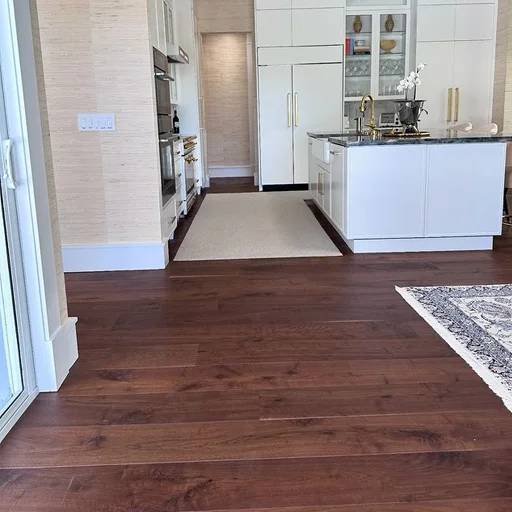
Matching Engineered Wood to Existing Solid Wood Staircases
Matching engineered wood flooring to existing solid wood staircases is one of the most challenging design tasks in luxury interiors, particularly in high-end villas such as those in Palm Jumeirah.
The difficulty arises from natural wood aging, color variation, and differences in finishing systems. Staircases often use solid hardwood that has oxidized over time, while new engineered flooring may appear lighter or more uniform.
To achieve visual continuity, specialists typically:
- Analyze existing wood species and grain pattern
- Match stain tones through custom blending
- Consider future color changes due to oxidation
- Use sample boards under natural lighting conditions
Even when the same species is used, achieving a perfect match is rarely immediate. Instead, the goal is visual harmony that becomes more consistent over time as both surfaces age together. Transitions between floors and stairs must also be carefully detailed to avoid abrupt visual breaks.
How Often to Recoat UV-Oiled Floors in Coastal Homes
UV-oiled engineered wood floors require periodic maintenance to maintain their protective properties, especially in coastal environments like Palm Jumeirah.
The frequency of recoating depends on exposure levels:
- Low traffic residential areas: every 2–4 years
- High traffic living areas: every 1–2 years
- Sun-exposed zones near glass façades: more frequent touch-ups
Salt air, humidity, and UV exposure gradually break down the surface oil layer, reducing water resistance and increasing susceptibility to staining. Recoating restores protection while maintaining the natural appearance of the wood.
Regular maintenance also helps prevent deeper wear that would require sanding. One advantage of UV-oiled systems is that they allow localized repairs without refinishing the entire floor, making them ideal for luxury villas with mixed-use living spaces.
Does Engineered Wood Qualify for Green Building Certification?
Engineered wood flooring can contribute positively to green building certification systems due to its efficient use of raw materials and long service life. In developments such as Palm Jumeirah, sustainability considerations are increasingly important in luxury residential design.
Key environmental advantages include:
- Reduced use of solid hardwood resources
- Longer lifecycle compared to many synthetic materials
- Potential for low-VOC adhesives and finishes
- Recyclable or renewable core materials
Certification eligibility depends on specific system requirements, including emissions ratings, sourcing documentation, and installation practices. Not all engineered wood products automatically qualify; compliance depends on manufacturing standards and material transparency.
Why Site Acclimation Is Mandatory Before Installation on Palm
Site acclimation is a critical step in engineered wood installation, especially in humid coastal environments like Palm Jumeirah.
Acclimation allows flooring materials to adjust to the temperature and humidity conditions of the installation environment before being fixed in place. Without this step, engineered wood may expand or contract after installation, leading to gaps, buckling, or surface distortion.
In beachfront villas, where humidity levels fluctuate between indoor air-conditioning and outdoor marine conditions, acclimation becomes even more important. Planks are typically stored in the installation space for several days to reach equilibrium.
Skipping this step is one of the most common causes of flooring failure in luxury residential projects. Proper acclimation ensures dimensional stability, reduces post-installation movement, and significantly improves long-term performance.
Frequently Asked Questions
Can engineered wood be installed over wet underfloor heating on Palm?
Yes, but only products with suitable thermal conductivity and surface temperature limits.
Is engineered wood resistant to termites in Dubai?
Not naturally; choose pressure-treated or thermally modified wood; avoid certain core types.
Does engineered wood fade through floor-to-ceiling Palm windows?
Yes; use UV-blocking film or curtains; aluminum oxide finish resists fading better than oil.
Can I install engineered wood over old marble without removing it?
Yes, as a floating floor over a vapor barrier and underlayment; no glue needed.
What’s the best wood species for Palm Jumeirah?
Smoked oak or thermally modified ash both have low moisture movement.
How to fix a squeaky engineered wood floor in a Palm villa?
Usually due to uneven subfloor; inject adhesive or add screws from below if accessible.
Is engineered wood a good investment for Palm resale value?
Yes, buyers prefer it over laminate for luxury villas, especially wide-plank designs.
How to maintain engineered wood in a beachfront villa?
Regular dry dusting, avoid water, use doormats at all entrances to trap sand.
Can engineered wood be installed on Palm villa upper floors only?
Yes, many owners use tile on ground floor and engineered wood upstairs for comfort.