Why Bamboo’s Rapid Renewability Matches Sustainable City’s Ethos
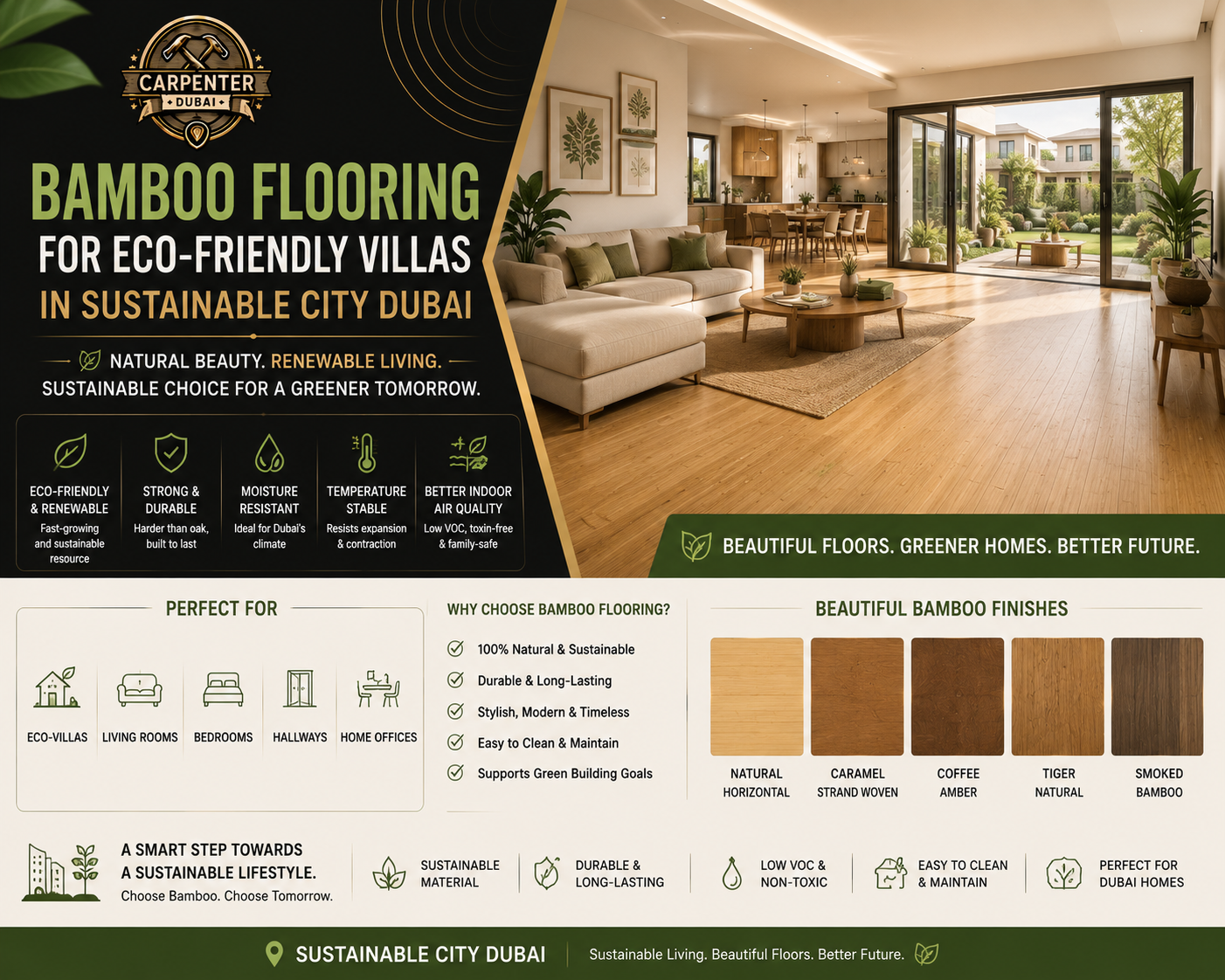
Bamboo Flooring is often highlighted as a sustainable flooring option because of its exceptionally fast growth cycle. Unlike hardwood trees that may take decades to mature, bamboo can be harvested within a few years without requiring replanting of the root system. This regenerative characteristic aligns well with environmentally conscious urban developments such as The Sustainable City, where reduced environmental impact and resource efficiency are key design principles.
From a lifecycle perspective, bamboo offers a balance between performance and sustainability. When processed correctly into engineered flooring, it provides hardness comparable to many traditional hardwoods while maintaining a significantly lower environmental footprint. Its renewability makes it particularly attractive for projects seeking green building alignment or eco-certification goals.
Strand Woven vs Horizontal Bamboo for Scratch Resistance
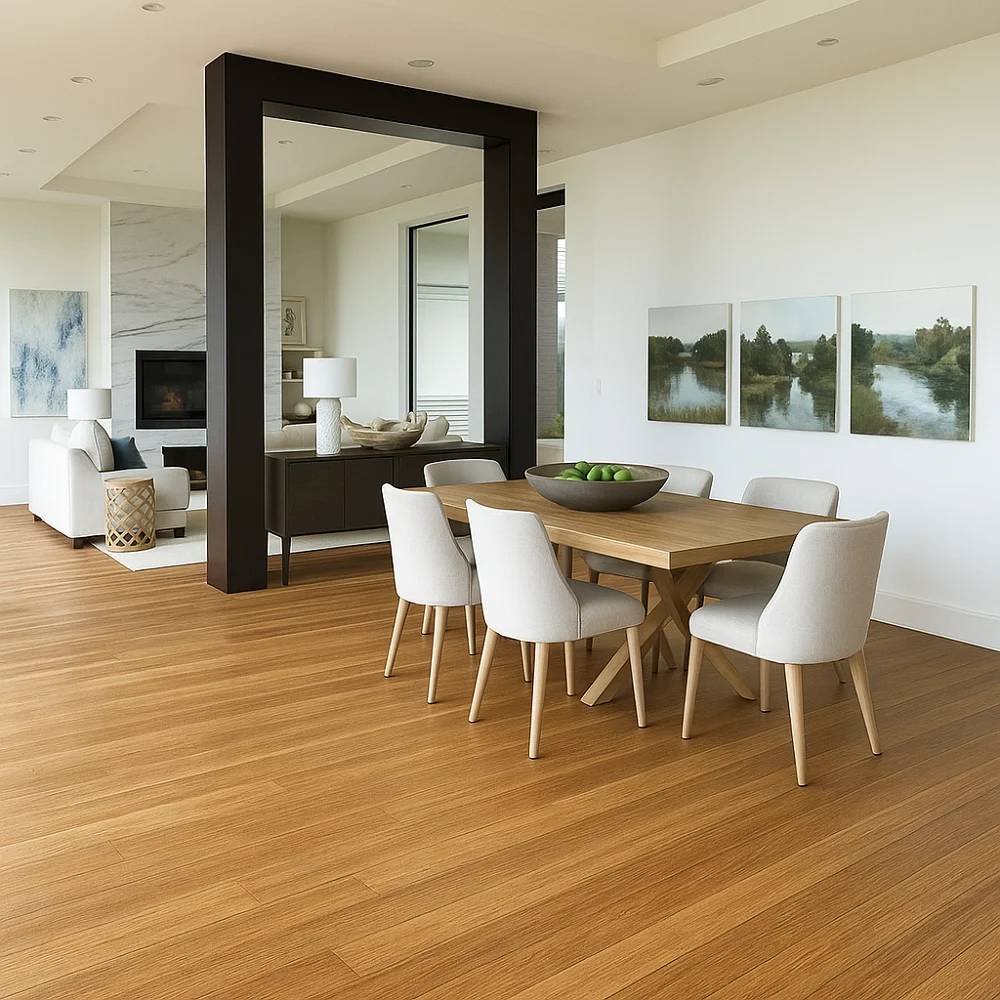
Bamboo flooring comes in different construction types, and scratch resistance varies significantly between them.
Strand Woven Bamboo
- Manufactured by compressing bamboo fibers under high pressure
- Extremely dense and hard surface
- High resistance to scratches and dents
- Suitable for high-traffic areas
Horizontal Bamboo
- Shows natural bamboo strip patterns
- Softer structure compared to strand woven
- More prone to surface marking
- Preferred for aesthetic warmth over durability
For residential and commercial interiors where durability is a priority, strand woven bamboo is generally the superior option due to its reinforced density and resistance to abrasion.
Carbonized Bamboo Color Stability in Direct Desert Sun
Carbonized bamboo undergoes a heat treatment process that darkens its color and enhances its aesthetic warmth. However, in regions with intense sunlight exposure such as Dubai, UV stability becomes an important consideration.
Carbonized finishes tend to be more sensitive to UV exposure compared to lighter natural tones. Over time, direct sunlight can cause:
- Gradual fading or lightening of color
- Uneven tone variation in sun-exposed areas
- Accelerated aging near large glass façades
Using UV-protective coatings, window films, and controlled shading systems can significantly reduce these effects and preserve color consistency.
Installing Bamboo Over Concrete Slabs with Vapor Barriers
Concrete slabs are common substrates in modern villas and apartments, but they often contain residual moisture that can affect bamboo flooring.
A proper installation system includes:
- Moisture testing of the slab
- High-quality vapor barrier installation
- Acoustic or leveling underlayment if needed
- Acclimation of bamboo before installation
The vapor barrier is especially important because bamboo is a natural material that can expand or contract with humidity changes. Without proper protection, moisture migration from the slab can lead to warping or joint separation.
Acoustic Performance in Multi-Family Sustainable City Units
In multi-family environments such as The Sustainable City, acoustic performance is a key design requirement. Bamboo flooring provides moderate sound absorption compared to harder surfaces like stone or ceramic.
Its performance is influenced by:
- Installation method (floating vs glue-down)
- Type of underlayment used
- Room layout and furniture density
Floating bamboo systems combined with acoustic underlayments can significantly reduce impact noise transmission between floors. However, airborne sound reduction still depends largely on building structure and wall insulation.
Bamboo Flooring and Underfloor Heating Compatibility
Bamboo can be compatible with underfloor heating systems when properly engineered and installed.
Key requirements include:
- Controlled surface temperature limits
- Gradual heating cycles to prevent stress
- Engineered bamboo construction (not solid strips)
- Proper installation adhesives or floating systems
Rapid temperature changes should be avoided, as natural fibers can expand or contract under thermal stress. When correctly managed, bamboo provides comfortable thermal performance and efficient heat transfer.
Termite Resistance of Bamboo Processed with Borate Treatment
Natural bamboo is not inherently immune to insect attack, but modern processing techniques significantly improve its resistance.
Borate treatment is commonly used to:
- Deter termites and wood-boring insects
- Enhance long-term durability
- Improve suitability for humid climates
In treated form, bamboo becomes a reliable flooring material even in environments where pest exposure is a concern. Proper sealing and installation further enhance its protective performance.
Maintenance: How Often to Apply UV-Resistant Topcoat
UV exposure is a key factor affecting bamboo appearance over time, especially in sun-drenched interiors.
Maintenance frequency depends on exposure levels:
- Low exposure: every 3–5 years
- Moderate exposure: every 2–3 years
- High sunlight exposure: more frequent inspection and touch-ups
UV-resistant topcoats help preserve color stability, reduce fading, and protect the surface from surface oxidation. Regular maintenance ensures long-term aesthetic consistency.
Why Strand-Woven Bamboo Outperforms Traditional Hardwoods
Strand-woven bamboo is often considered superior to many traditional hardwoods in terms of hardness and stability.
Advantages include:
- Higher density due to compression manufacturing
- Improved resistance to dents and scratches
- More consistent material structure
- Better suitability for high-traffic interiors
While traditional hardwoods offer natural grain variation and prestige appeal, strand-woven bamboo provides a stronger performance profile in demanding environments. This makes it a popular choice for modern sustainable interiors seeking both durability and environmental responsibility.
Frequently Asked Questions
Can bamboo flooring be refinished like hardwood in Sustainable City?
Yes, strand-woven bamboo with sufficient wear layer can be sanded once or twice.
Does bamboo expand and contract in Dubai’s humidity swings?
Yes, less than solid wood but more than engineered; requires proper acclimatization.
Is bamboo flooring FSC-certified in the UAE?
Some brands; look for FSC 100% label; avoid cheap unbranded bamboo.
Can bamboo flooring be used in bathrooms in Sustainable City?
No unless specially treated; water causes black staining and delamination.
How to clean bamboo floors without leaving streaks?
Dry mop daily; damp mop with bamboo-specific cleaner (pH neutral) weekly.
Does bamboo flooring fade in color over time?
Carbonized bamboo fades faster; choose natural color with UV-inhibitor finish.
Is bamboo flooring noisy underfoot?
No with proper underlayment; direct glue-down is the noisiest.
Can bamboo be installed in dome-shaped rooms?
Yes with narrow planks to curve around walls; wide planks won’t bend.
Is bamboo flooring harder than oak?
Strand-woven bamboo is significantly harder than most hardwoods, ideal for high traffic.