How JVC’s Thin Concrete Slabs Amplify Footfall Noise Between Floors
In many mid-rise residential buildings in Jumeirah Village Circle, residents are often surprised by how easily footsteps, moving chairs, and dropped objects can be heard between apartments. The primary reason is that concrete slabs, while structurally strong, are efficient transmitters of vibration.
When someone walks across a floor, the impact energy enters the slab and travels through the building structure. Thinner slabs generally have less mass to absorb and dissipate these vibrations, allowing more impact noise to pass into neighboring units. Open-plan layouts, hard flooring surfaces, and minimal acoustic treatment can make the problem even more noticeable.
The most common complaints involve:
- Footsteps from upper-floor neighbors
- Children running across hard floors
- Furniture movement
- Exercise equipment vibrations
Because the noise travels through the building structure rather than the air, simply adding wall insulation rarely solves the issue. Effective mitigation typically requires flooring systems specifically designed to reduce impact transmission at the source.
Best Floating Floors for Impact Noise Reduction Below Comfort Threshold
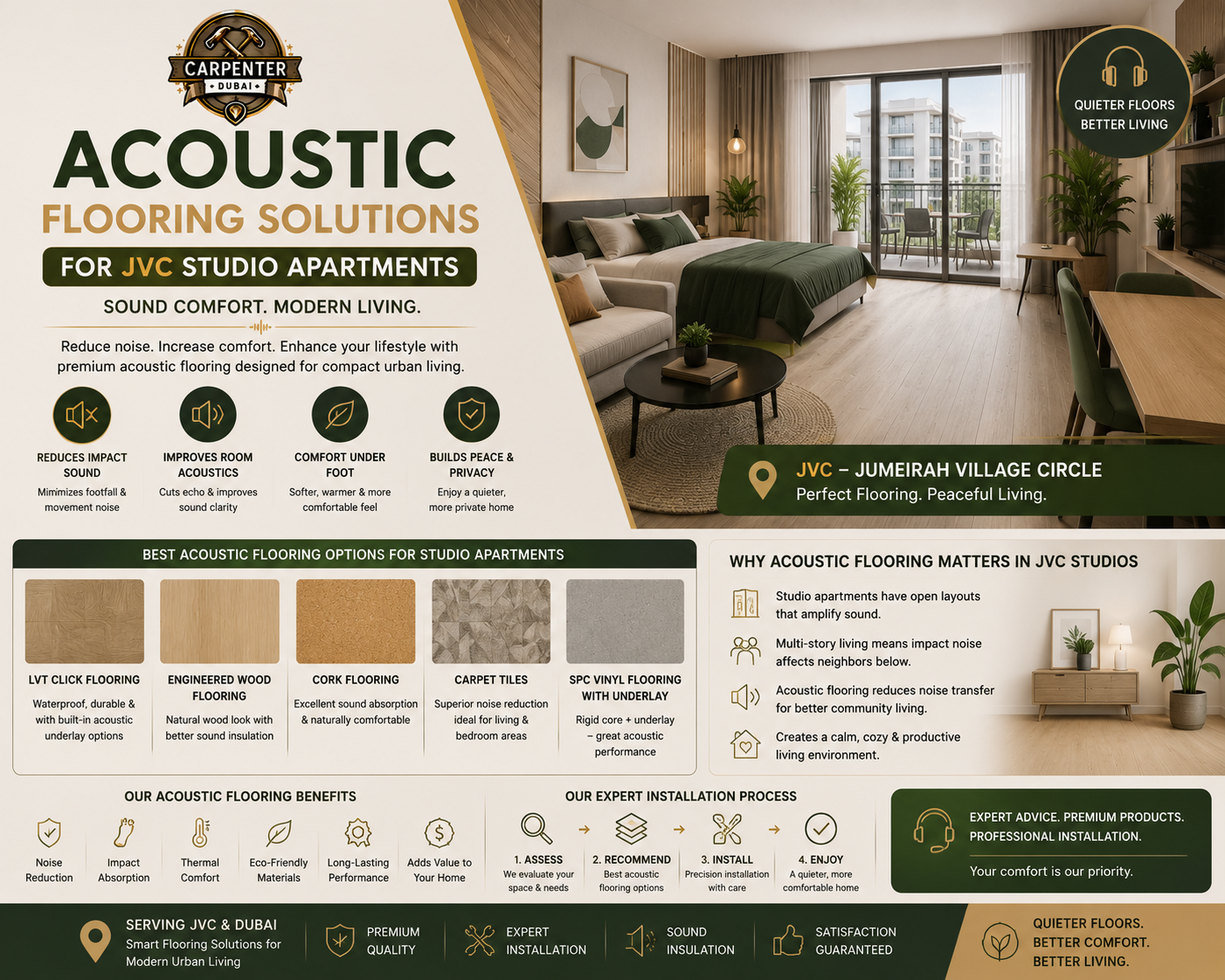
Floating floor systems are among the most effective methods of reducing impact noise because they decouple the finished floor from the structural slab. Instead of transferring vibrations directly into the building structure, the underlayment absorbs a portion of the impact energy.
Common floating floor options include:
- Luxury vinyl flooring with acoustic backing
- Laminate flooring with premium underlayment
- Engineered wood flooring over resilient mats
The best systems combine:
- Dense acoustic underlayments
- Perimeter isolation strips
- Proper expansion gaps
- Continuous floating installation
A well-designed floating floor can dramatically reduce footfall noise and improve comfort for both occupants and neighbors.
Combining Cork Underlayment with Laminate for Airborne Noise Control
Cork remains one of the most popular acoustic underlayments because of its natural cellular structure. Millions of microscopic air pockets help absorb vibration and reduce sound transmission.
When installed beneath laminate flooring, cork can:
- Reduce impact noise from footsteps
- Improve room acoustics
- Dampen minor airborne sound reflections
- Add underfoot comfort
However, it is important to understand that cork performs best as part of a complete flooring assembly. While it can improve acoustic comfort, airborne sound isolation between apartments is influenced primarily by wall and slab construction rather than underlayment alone.
Testing Acoustic Underlayments: PE Foam vs Rubber vs Cork in JVC
Not all acoustic underlayments perform equally.
PE Foam
- Economical
- Easy to install
- Moderate impact sound reduction
- Limited long-term compression resistance
Rubber Underlayment
- Excellent density
- Superior impact noise control
- Durable under heavy loads
- Higher material cost
Cork Underlayment
- Natural material
- Good acoustic performance
- Sustainable option
- Moderate resilience over time
For apartments where noise reduction is a priority, dense rubber products typically provide the strongest performance. Cork offers a balance between acoustic benefits, comfort, and environmental appeal.
Dubai Building Code Compliance: Minimum Sound Transmission Class for Apartments
Acoustic performance in multifamily residential buildings is often evaluated using standardized measurements such as:
- STC (Sound Transmission Class) for airborne noise
- IIC (Impact Insulation Class) for impact noise
These ratings help assess how effectively floors and walls limit sound transmission between units. Compliance requirements may vary depending on project type, building classification, and approval authority.
When undertaking renovations, property owners should ensure that any flooring changes do not negatively affect the acoustic performance expected by building management or project specifications. Removing carpet and replacing it with hard flooring without acoustic treatment is a common source of resident complaints.
Retrofitting Acoustic Mats Under Existing Tiles Without Full Demo
Many homeowners seek acoustic improvements without removing existing floor finishes. While complete replacement generally offers the best results, certain retrofit solutions can reduce disruption.
Possible approaches include:
- Floating floor systems installed over existing tile
- Thin acoustic membranes beneath new flooring
- Low-profile resilient underlayments
- Sound-isolation mats compatible with renovation projects
The feasibility depends on:
- Available floor height
- Door clearances
- Existing floor condition
- Desired acoustic improvement
A professional assessment is recommended before selecting a retrofit strategy.
Noise Testing Before and After: How a Pro Measures Decibel Reduction
Professional acoustic testing provides objective data about flooring performance. Testing typically involves generating controlled impact or airborne sound and measuring transmission into adjacent spaces.
Common tools include:
- Impact tapping machines
- Sound level meters
- Frequency analysis equipment
- Acoustic measurement software
Measurements taken before and after installation help quantify improvement and verify whether performance goals have been achieved. Professional testing is particularly useful when resolving disputes between neighbors or evaluating renovation effectiveness.
Cost-Benefit: Full Acoustic Flooring vs Noise Complaints and Fines
Acoustic flooring upgrades represent an upfront investment, but the long-term benefits can be significant.
Potential advantages include:
- Reduced neighbor complaints
- Improved living comfort
- Enhanced rental appeal
- Better resale perception
- Lower risk of building management disputes
In some developments, repeated noise complaints may result in formal warnings or requirements to install additional acoustic treatment. Investing in proper sound-control measures during renovation is often less expensive than addressing persistent complaints after occupancy.
Do Carpets or Vinyl Provide Better Soundproofing in JVC Bedrooms?
When comparing flooring options for bedroom acoustics, carpet generally provides superior sound absorption. The combination of fibers, backing, and underlay helps absorb both impact and airborne sound within the room.
Carpet Advantages
- Excellent footfall noise reduction
- Softer room acoustics
- Greater impact absorption
Vinyl Advantages
- Easier cleaning and maintenance
- Better moisture resistance
- More modern appearance
- Compatible with high-performance acoustic underlayments
For maximum soundproofing, carpet remains the stronger performer. However, luxury vinyl flooring combined with a premium acoustic underlayment can deliver a substantial improvement while offering easier maintenance and greater durability.
Frequently Asked Questions
Can I install acoustic flooring without raising my apartment door height?
Yes, use thin high-density rubber underlayment with vinyl to keep total build low.
What is the maximum noise reduction possible in JVC studios?
Significant impact noise reduction with mass-loaded vinyl + rubber + floating floor.
Is cork underlayment mold-resistant in Dubai’s humidity?
Yes, if treated with anti-microbial coating; natural cork resists mold but needs sealing.
Will acoustic flooring void my JVC apartment lease agreement?
No, but you must use floating floors not glued to avoid damaging the base slab.
Does building management allow DIY acoustic flooring in JVC?
Most require professional installation with proof of compliance to strata noise bylaws.
What’s the best flooring to reduce TV noise through floors?
Mass-loaded vinyl underlayment with a dense carpet on top stops airborne voices.
Can I get my security deposit back after installing acoustic flooring?
Yes, if you remove the floating floor and restore original flooring before moving out.
How to test if my current floor meets Dubai acoustic codes?
Hire a certified acoustic engineer to perform a tapping machine test.
Is acoustic underlayment compatible with underfloor heating?
Only specific thin rubber or cork underlayments with low thermal resistance.