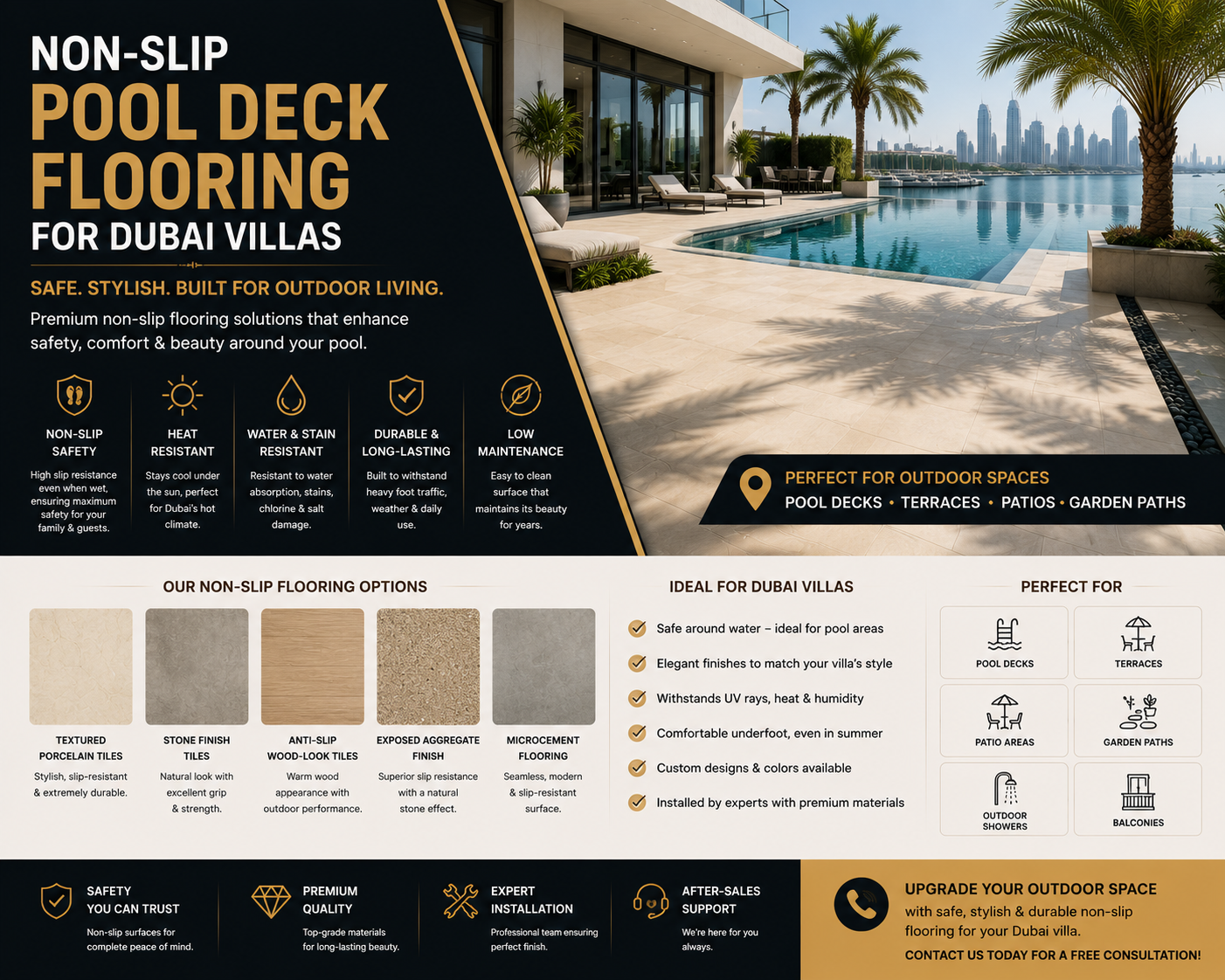
Why Poolside Tiles Become Lethal When Wet in Dubai’s High Sun
Pool decks in communities such as Arabian Ranches face a unique combination of intense sunlight, high surface temperatures, water exposure, and frequent barefoot traffic. Many conventional outdoor tiles become hazardous when a thin layer of water sits on the surface.
The problem is not simply water itself. Sun exposure gradually polishes microscopic surface textures through foot traffic and cleaning, reducing grip over time. Sunscreen, body oils, and pool chemicals can also create an invisible film that lowers friction. When wet feet move quickly from the pool to surrounding areas, the risk of slipping increases significantly.
Highly polished stone and glossy porcelain are particularly problematic because they rely on surface smoothness for appearance rather than traction. Safe pool decking materials maintain grip even when completely saturated. The best systems combine slip-resistant texture, proper drainage, and heat-resistant properties to create a safe walking environment throughout the year.
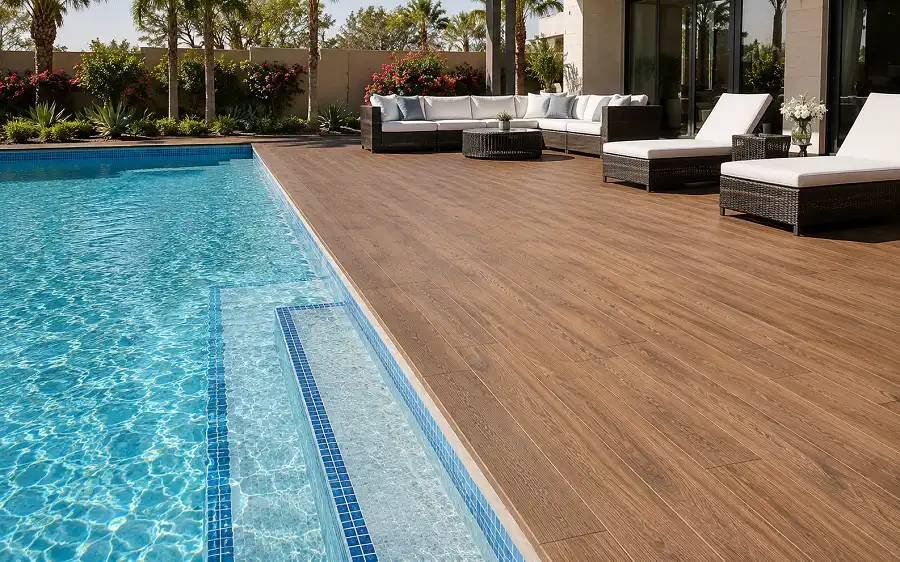
Testing Slip Resistance: Minimum Safety Ratings for Arabian Ranches Pools
Slip resistance should be evaluated using recognized testing standards rather than visual appearance alone. Many tiles that look textured may perform poorly when wet.
Common rating systems include:
- R-ratings (ramp testing)
- Pendulum testing values
- Dynamic coefficient of friction measurements
For residential pool environments, flooring should provide reliable traction under wet barefoot conditions. Areas immediately surrounding pools, steps, and shallow entries require particularly high slip resistance.
When selecting materials, homeowners should request independent test data rather than relying solely on marketing claims. Safety performance can vary significantly between products that appear visually similar.
Grout Types That Resist Chlorine and Salt Water Degradation
Pool environments expose grout to constant chemical attack. Traditional cement-based grout can gradually deteriorate when repeatedly exposed to chlorinated water or saltwater pool systems.
More durable options include:
- High-performance polymer-modified grout
- Epoxy grout systems
- Chemical-resistant specialty formulations
These products provide:
- Reduced water absorption
- Better stain resistance
- Improved resistance to chlorine exposure
- Lower maintenance requirements
Although premium grout systems cost more initially, they often reduce long-term repair expenses and improve overall pool deck durability.
How Pool Deck Drainage Slope Prevents Algae and Standing Water
Drainage design is one of the most important factors in pool safety. Even the most slip-resistant tile can become hazardous if water remains on the surface.
A properly designed deck should:
- Direct water away from walking paths
- Prevent puddle formation
- Promote rapid drying after use
- Minimize algae growth opportunities
Standing water encourages biofilm formation, which dramatically reduces traction. Effective drainage not only improves safety but also reduces cleaning requirements and prolongs the life of the deck materials.
Best Tile Textures: Shark Skin vs Bamboo vs Leather Finish for Safety
Texture selection significantly affects wet-slip performance.
Shark Skin Finish
- Aggressive micro-texture
- Excellent wet grip
- Popular for pool surrounds
Bamboo Finish
- Linear texture pattern
- Comfortable under bare feet
- Good drainage characteristics
Leather Finish
- Softer textured appearance
- Comfortable surface feel
- Balanced aesthetic and traction performance
The ideal choice depends on the desired balance between comfort, appearance, and slip resistance. For households with children or elderly users, higher-traction textures are generally preferable.
Heat Absorption Comparison: Light vs Dark Tiles on Bare Feet in Summer
Dubai’s summer conditions can cause dramatic differences in surface temperature between tile colors.
Light-Colored Tiles
- Reflect more solar radiation
- Remain significantly cooler
- More comfortable for barefoot use
Dark-Colored Tiles
- Absorb more heat
- Reach much higher surface temperatures
- May become uncomfortable during peak afternoon periods
Color selection therefore influences both comfort and safety. Excessively hot surfaces can encourage users to move quickly across the deck, increasing slip risk.
Installing Non-Slip Tiles Over Existing Pool Concrete Without Demolition
In many renovation projects, it is possible to install new pool decking without removing the existing concrete slab. This approach can reduce cost, noise, and project duration.
Success depends on:
- Structural condition of the existing slab
- Surface preparation quality
- Proper waterproofing assessment
- Suitable tile and adhesive selection
The existing substrate must be stable and free from significant movement or cracking. Professional evaluation is recommended before proceeding with overlay installations.
Maintenance Routine: Weekly Deep Cleaning to Preserve Slip Resistance
Slip-resistant surfaces gradually lose effectiveness if contaminants accumulate within their texture profile.
A weekly maintenance program should include:
- Removal of sunscreen residue
- Cleaning of body oils and organic contaminants
- Inspection of grout joints
- Removal of algae or biofilm development
- Cleaning of drainage channels
Regular maintenance preserves the texture that provides traction and helps ensure long-term safety performance.
Dubai Municipality Pool Safety Compliance for Non-Slip Flooring
Pool areas must be designed with safety as a primary consideration. While specific requirements may vary depending on project type and location, compliance generally focuses on:
- Slip resistance performance
- Drainage effectiveness
- Safe transitions between surfaces
- Proper installation practices
Homeowners undertaking major pool renovations should verify current requirements with relevant authorities and community management organizations before commencing work.
In communities such as Arabian Ranches, compliance may involve both municipal regulations and community-specific architectural guidelines. Selecting tested non-slip materials and using qualified installers helps ensure that the finished pool deck meets both safety expectations and long-term performance requirements.
Frequently Asked Questions
What is the minimum slip resistance rating for a Dubai villa pool deck?
Specific ratings are required; higher is recommended for stepped edges and shallow water zones.
Do non-slip tiles feel rough on bare feet?
Modern porcelain non-slip tiles use micro-textures that are safe but not abrasive.
Can I install non-slip tiles over old pool deck mosaics?
Yes, with a bonding agent and anti-fracture membrane to prevent cracking.
What grout is best for saltwater pool decks in Emirates Hills?
Epoxy grout resists chlorine, salt, and doesn’t harbor black mold.
Are non-slip tiles heat-resistant in Dubai summer?
Yes, but light colors stay significantly cooler than dark tiles.
Do non-slip tiles require special cleaning products?
No, pH-neutral cleaner and a pressure washer at correct pressure are sufficient.
Will non-slip tiles crack from ground movement in Palm Jumeirah?
Use a decoupling membrane to absorb minor shifts; large cracks need structural repair first.
How to remove algae from pool deck tiles without chemicals?
Pressure washing with hot water and a stiff brush removes algae effectively.
Can non-slip tiles be used for indoor pool areas in Dubai villas?
Yes, they are ideal for indoor wet zones to prevent slipping.