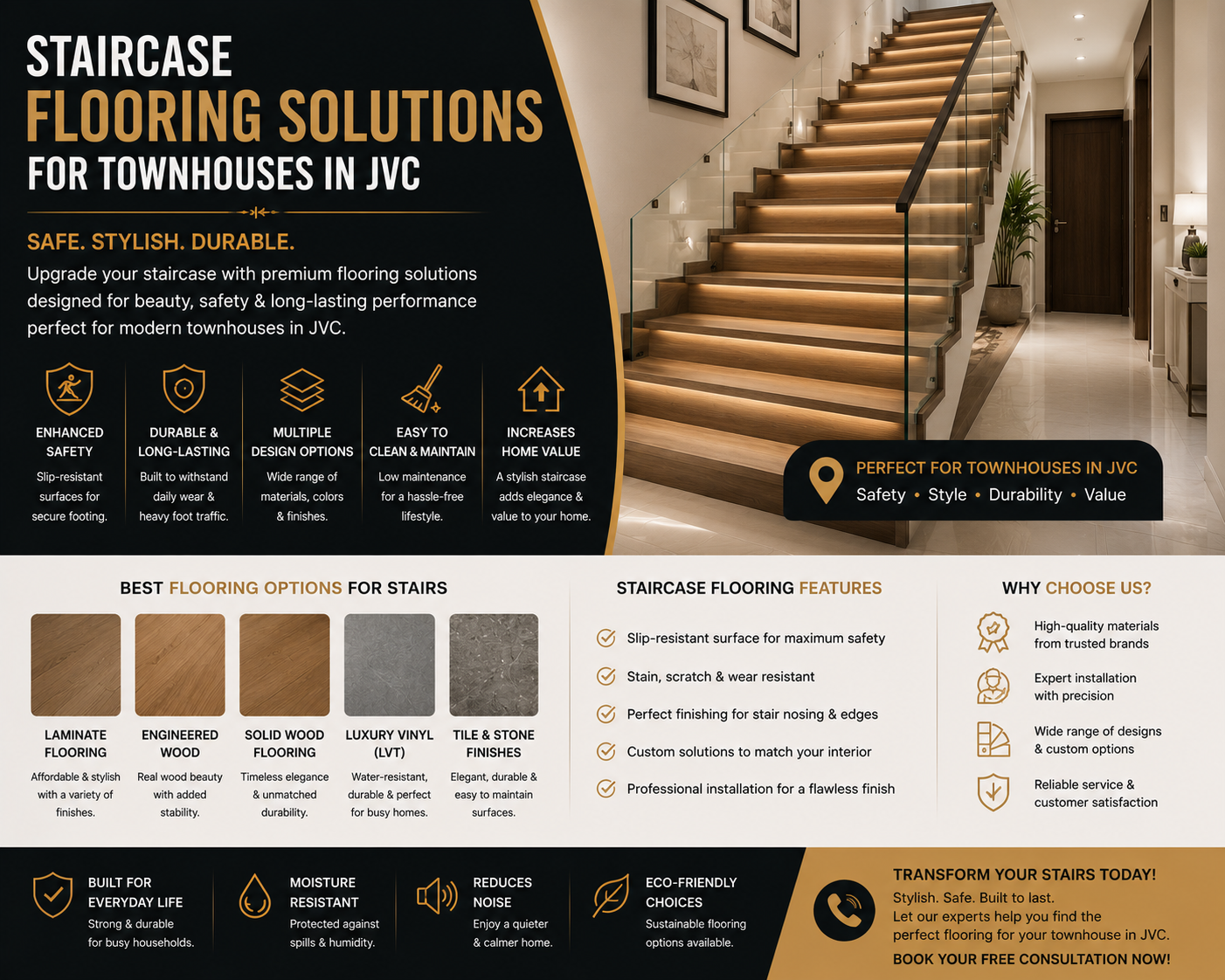
Comparing Carpet, Vinyl, Wood, and Tile on Stair Treads for Safety
Stair safety depends heavily on both surface friction and consistency underfoot. In multi-level homes such as villas in Dubai Hills Estate or Arabian Ranches, material choice on stair treads directly affects slip risk, comfort, and noise.
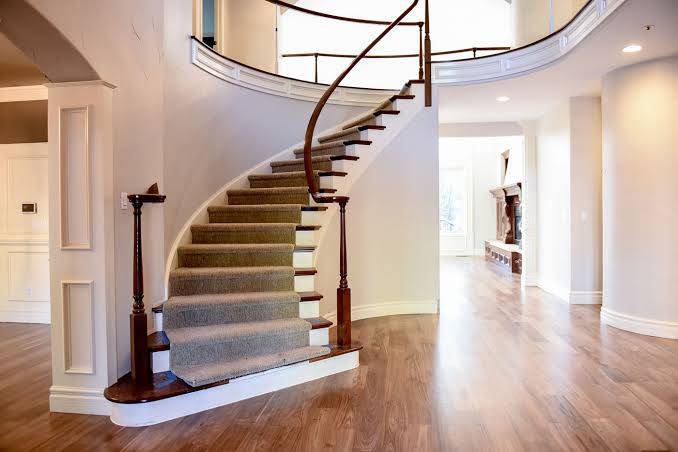
- Carpet: Highest slip resistance due to fiber grip; safest for children and elderly; but harder to maintain and can trap dust.
- Vinyl: Good balance of slip resistance and durability; easy to clean; must have textured or rated stair-specific surface.
- Wood: Visually premium; moderate grip; performance depends on finish and maintenance.
- Tile/Stone: Most visually seamless with floors like marble, but highest slip risk unless heavily textured or treated.
For safety-critical homes, carpet remains the safest option, while engineered vinyl stair systems offer the best compromise between aesthetics and performance.
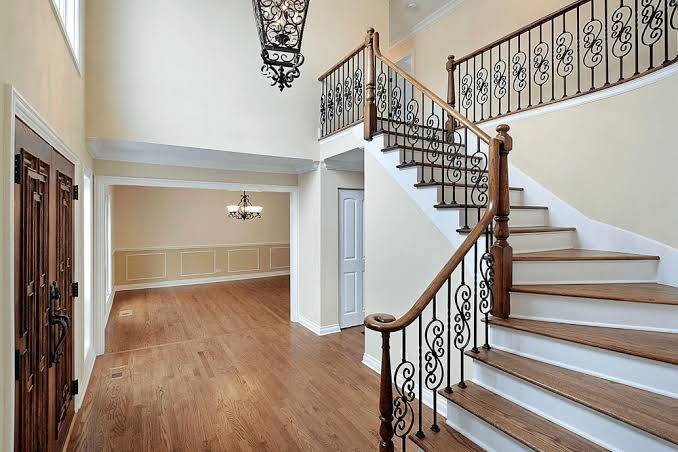
Nosing Profiles: Aluminum vs Wood Rounded Edges for Durability
Stair nosing protects the edge of each tread, which is the most high-impact wear zone.
- Aluminum nosing:
Extremely durable, resistant to chipping, ideal for modern and high-traffic homes. Can create a sharp architectural look but may feel harder underfoot. - Wood rounded nosing:
More visually seamless with wooden stairs and flooring transitions. Offers a softer aesthetic but can wear faster at edges over time.
In luxury villas, aluminum is often used in contemporary designs, while rounded wood nosing is preferred for traditional or warm interior styles.
How to Match Stair Flooring to Upstairs Bedrooms and Downstairs Marble
Staircases often act as the visual and material bridge between different flooring zones.
For example:
- Downstairs marble → staircase → upstairs wood or carpet
The goal is continuity without abrupt transitions. Designers typically:
- Match undertones (warm vs cool)
- Align grain direction with upper flooring
- Use transition trims that echo baseboard colors
- Avoid high-contrast mismatches that visually “break” circulation flow
In luxury homes in Dubai Hills Estate, staircases are often treated as a design centerpiece rather than a transition zone.
Acoustic Benefits of Carpet on Stairs vs Hard Surfaces in Multi-Level Homes
Stairs are one of the biggest sources of impact noise in multi-level homes.
- Carpeted stairs:
Absorb footfall noise, reduce echo, significantly improve acoustic comfort in bedrooms below. - Hard surfaces (wood, vinyl, tile):
Amplify sound reflections; footsteps are clearly transmitted between floors.
For homes with children or open-plan layouts, carpet remains the most effective acoustic solution, especially when bedrooms are located adjacent to stair cores.
Installing Vinyl Treads Over Old Worn Stairs Without Removing Risers
Retrofitting vinyl over existing stairs is possible, but requires careful preparation.
Key steps include:
- Checking structural integrity of existing treads
- Leveling uneven surfaces
- Ensuring secure adhesive bonding
- Maintaining consistent riser height after installation
This method is popular in renovation projects across villas in Arabian Ranches because it avoids full demolition while updating aesthetics. However, precision is critical—misalignment can create trip hazards.
Slip Resistance Testing for Stairs in Homes with Elderly Residents
For elderly safety, stair slip resistance is not optional—it is essential.
Testing typically evaluates:
- Dry grip performance
- Wet slip resistance (critical for bathrooms nearby)
- Edge traction at nosing points
Textured finishes, rubber inserts, or carpet overlays significantly improve safety performance. Smooth polished surfaces are generally unsuitable unless heavily modified.
DIY vs Pro Installation: Why Stringer Alignment Matters
Stair installation is one of the most technically sensitive flooring tasks.
Stringers (the structural sides of stairs) must be perfectly aligned because:
- Even small deviations amplify across steps
- Misalignment causes uneven riser heights
- It increases trip risk and visual distortion
Professional installers use laser levels and templating systems to ensure uniform geometry. DIY installations often fail here, even if individual steps look correct.
Maintenance Routine for Stair Nosing to Prevent Wear
Stair nosing takes the highest mechanical stress in any staircase.
Maintenance includes:
- Regular cleaning of edge zones
- Checking for micro-chipping or delamination
- Reapplying protective coatings (for wood or vinyl)
- Tightening or replacing loose nosing profiles
In high-traffic homes, early maintenance prevents costly full-step replacements later.
Why Stair Tread Depth and Riser Height Matter for Safety Codes
Stair geometry is as important as material choice.
- Tread depth: determines foot placement stability
- Riser height: affects stepping effort and rhythm
Inconsistent dimensions increase fall risk significantly. Even small variations between steps can cause missteps, especially in low-light conditions.
Frequently Asked Questions
What’s the safest stair flooring for toddlers in JVC townhouses?
Short-pile carpet with high friction backing; avoid polished wood or tile.
Can I install different flooring on stairs than the landing?
Yes, use a transition strip but ensure nosing matches landing material for safety.
How to reduce stair noise (squeaking) in JVC townhouses?
Tighten wedges and add glue-assisted installation; carpet dampens noise best.
Is it possible to install heated stair treads?
Yes with electric heating film under tile or stone; not recommended for wood.
How long do vinyl stair treads last in high-traffic homes?
Many years with thick wear layer; carpet lasts less time on stairs.
Can I paint concrete stairs instead of flooring?
Yes with epoxy paint and anti-slip aggregate; but less durable than treads.
What’s the best nosing for pets climbing stairs?
Rounded wood or rubber nosing; metal nosing can hurt paws if sharp.
How to clean stair carpets in Dubai’s dusty environment?
Vacuum weekly; professional steam clean periodically to remove embedded sand.
Can open-riser stairs be retrofitted with flooring?
Yes, but requires special nosing and riser material for safety and aesthetics.