How to Design a Transition Between Hand-Knotted Carpet and Perimeter Tile
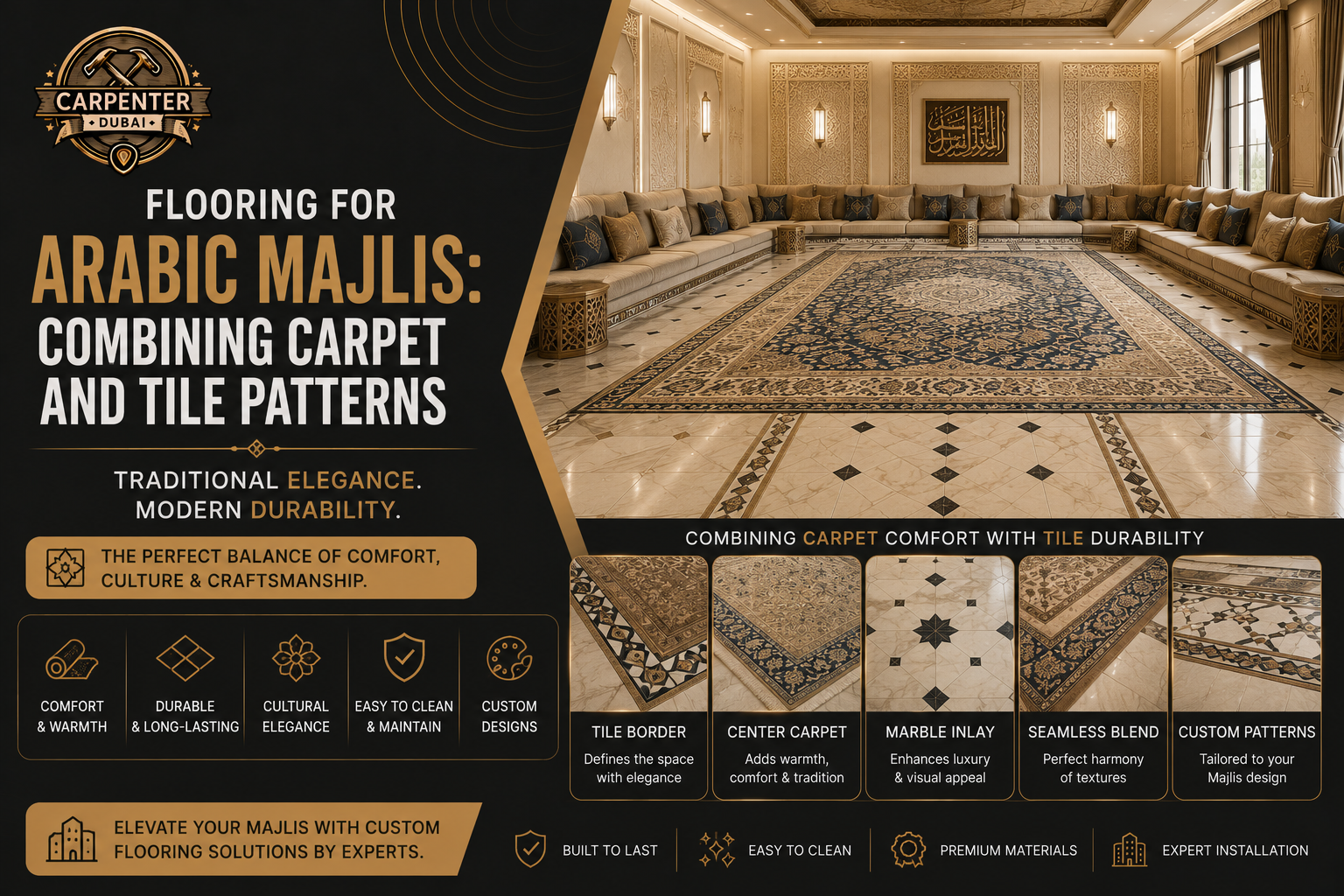
In traditional reception spaces such as a majlis in Dubai, the transition between a hand-knotted carpet and surrounding perimeter tile is both a functional and aesthetic decision. The goal is to create a clean visual boundary without interrupting the luxury feel of either material.
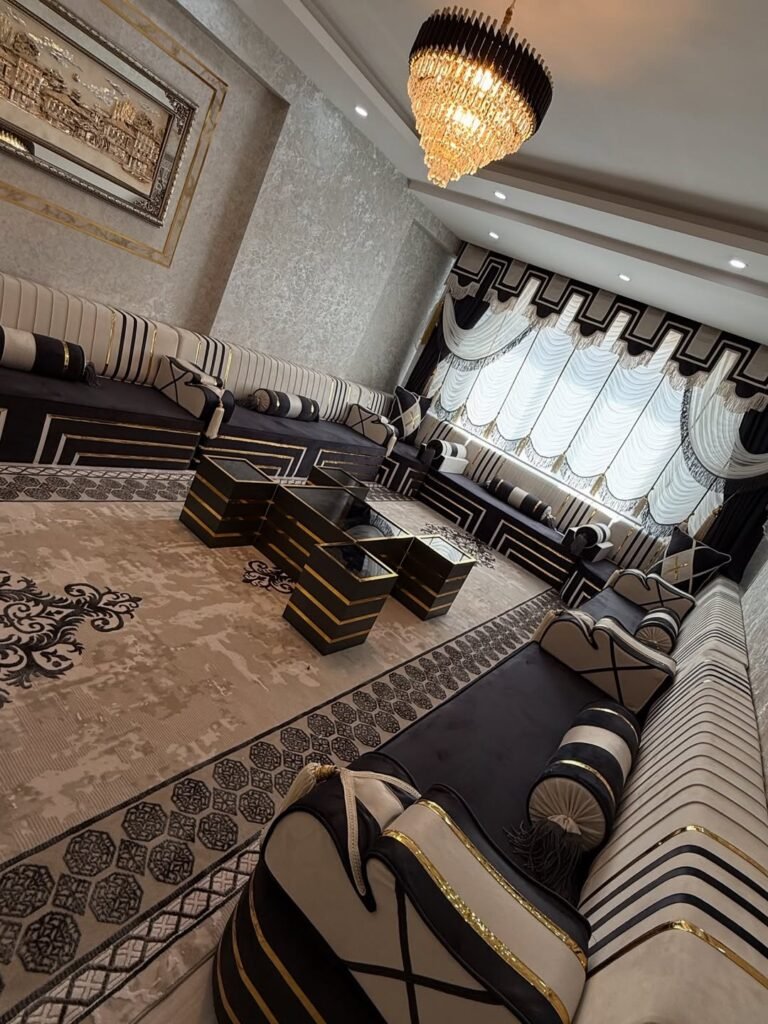
A common approach is to frame the carpet like an “island,” where the tile acts as a border. The edge must be precisely aligned so the carpet sits perfectly flush or slightly recessed to avoid trip hazards. Designers often use a thin metal or wood separator to define the boundary while protecting carpet edges from fraying.
Proper planning also considers furniture layout, ensuring seating zones sit fully on the carpet while circulation paths remain on tile. This creates a natural hierarchy of space—formal seating versus movement zones—while maintaining durability and ease of maintenance.
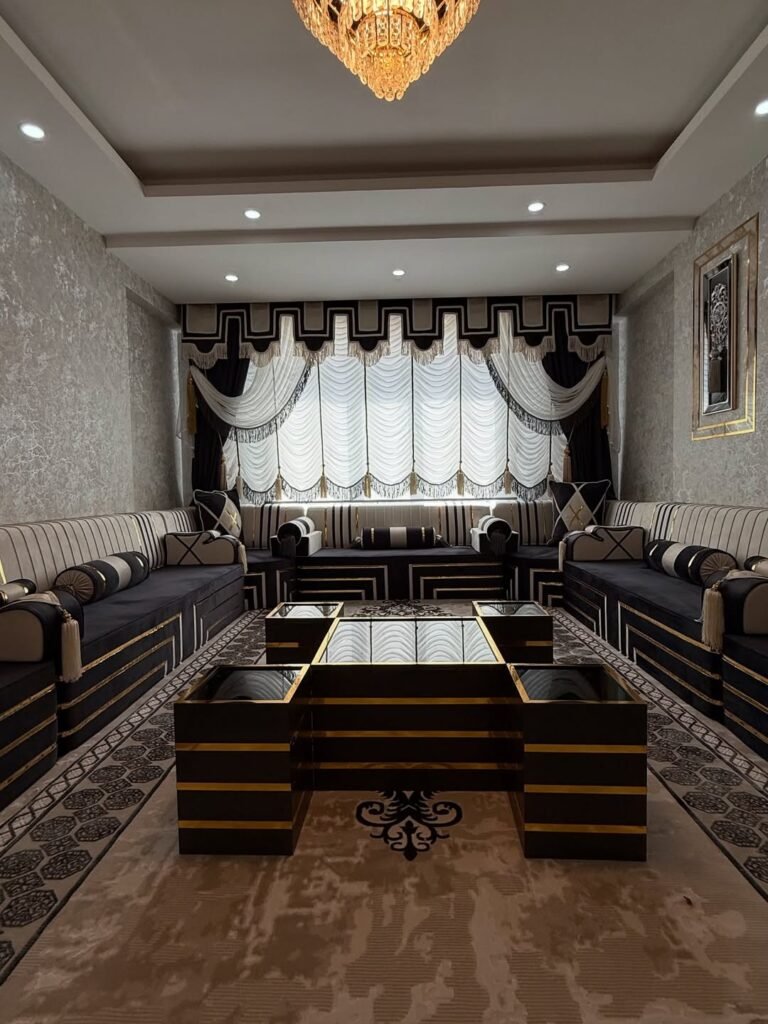
Traditional Geometric Tile Patterns That Complement Modern Carpets
Geometric tile patterns play a strong supporting role in majlis design, especially when paired with ornate hand-knotted carpets.
Common complementary patterns include:
- Star and polygon Islamic motifs
- Interlocking geometric tessellations
- Subtle monochrome arabesque borders
The key is balance. The tile should not compete visually with the carpet but instead frame it. In luxury interiors, especially in villas across Dubai, designers often choose restrained tile tones so the carpet remains the focal point.
Neutral stone finishes or lightly patterned ceramics work best when the carpet already carries strong visual complexity.
Acoustic Benefits of Wool Carpet in Large Majlis for Voice Clarity
Large majlis spaces often suffer from echo due to high ceilings, hard flooring, and reflective wall surfaces.
Wool carpet significantly improves acoustics by:
- Absorbing mid and high-frequency sound reflections
- Reducing reverberation time
- Enhancing speech clarity during conversation
This is especially important in social settings where multiple conversations occur simultaneously. Compared to synthetic fibers, wool provides superior natural sound absorption due to its dense and irregular fiber structure.
The result is a warmer, more intimate acoustic environment, even in large open reception halls.
Heat Reflection: Why Tile Borders Keep Majlis Cooler in Summer
In hot climates like Dubai, material selection affects perceived indoor temperature.
Tile surfaces naturally reflect and dissipate heat more effectively than carpet. When used as perimeter borders around carpeted seating zones, tile helps:
- Reduce heat buildup in circulation paths
- Improve airflow efficiency across the floor
- Create cooler walking zones near entrances
This combination allows the majlis to maintain a balance between comfort (carpeted seating) and thermal efficiency (tile circulation areas), especially during peak summer months.
Installing a Brass or Wood Transition Strip Flush with Both Surfaces
Transition strips between carpet and tile must be both functional and visually refined.
A flush installation ensures:
- No trip hazards between materials
- Smooth movement for guests
- Clean visual separation line
Brass strips offer a luxurious architectural accent and high durability, while wood strips provide a warmer, more traditional aesthetic. Precision leveling is critical so both surfaces meet at the same height, especially in high-end interiors in Dubai where craftsmanship is a key design expectation.
Stain Resistance for Coffee and Gahwa Spills on Carpet vs Tile
Spills from coffee and traditional Arabic gahwa are common in majlis spaces.
- Tile: Highly resistant; easy to wipe; minimal long-term impact
- Carpet (especially wool): Absorbs quickly; requires immediate treatment to prevent staining
Wool carpets have natural stain resistance to some extent due to lanolin content, but delayed cleaning can still result in discoloration. Tile remains the safer surface in spill-prone zones, which is why it is often used as the surrounding border.
How Often to Deep Clean Wool Carpet in High-Traffic Majlis
Wool carpets in high-use reception areas require a structured maintenance schedule:
- Light vacuuming: 2–3 times per week
- Spot cleaning: as needed
- Professional deep cleaning: every 6–12 months
In majlis spaces across Dubai, where guests frequently enter with fine dust particles, more frequent professional cleaning may be necessary to preserve fiber integrity and appearance.
Why Professional Installation Prevents Carpet Edge Fraying
Carpet edges are the most vulnerable part of any installation.
Professional installers prevent fraying by:
- Using proper binding or serging techniques
- Ensuring precise cutting and fitting
- Securing edges under transition strips or thresholds
- Maintaining correct tension during installation
Poorly finished edges will unravel over time, especially in high-traffic social spaces like majlis rooms.
How to Choose Carpet Color That Hides Sand Dust Between Cleanings
In desert environments like Dubai, fine sand dust is unavoidable.
To reduce visible soiling:
- Mid-tone neutrals (beige, taupe, warm grey) work best
- Slight patterning helps disguise dust accumulation
- Avoid pure white or very dark tones, which show contrast more easily
Frequently Asked Questions
What’s the best carpet pile height for a formal majlis?
Medium cut pile; too high makes furniture wobble; too low feels hard.
How to remove gahwa (coffee) stains from beige carpet in majlis?
Blot then apply white vinegar solution; never rub; call pro for old stains.
Is wool carpet moth-resistant in Dubai’s climate?
No, store wool carpets with moth repellent in summer; synthetic is safer but less premium.
Can tile borders be installed without raising the floor level?
Yes, by recessing tile into screed to match carpet height including underlayment.
How to prevent carpet edges from fraying next to tile?
Use a concealed tack strip and carpet edge binding glued professionally.
What tile finish is easiest to clean near majlis entrance?
Polished porcelain; sand dust wipes easily; textured tiles trap dirt.
Can underfloor heating be installed only under tile border?
Yes, zone heating with electric mats under tile only; carpet area doesn’t need heat.
How to match carpet and tile colors for a cohesive look?
Pull a secondary color from the carpet for the tile border; avoid matching exactly.
Is wool or synthetic carpet better for a high-traffic majlis?
Wool for luxury and stain resistance; synthetic for durability and lower cost.