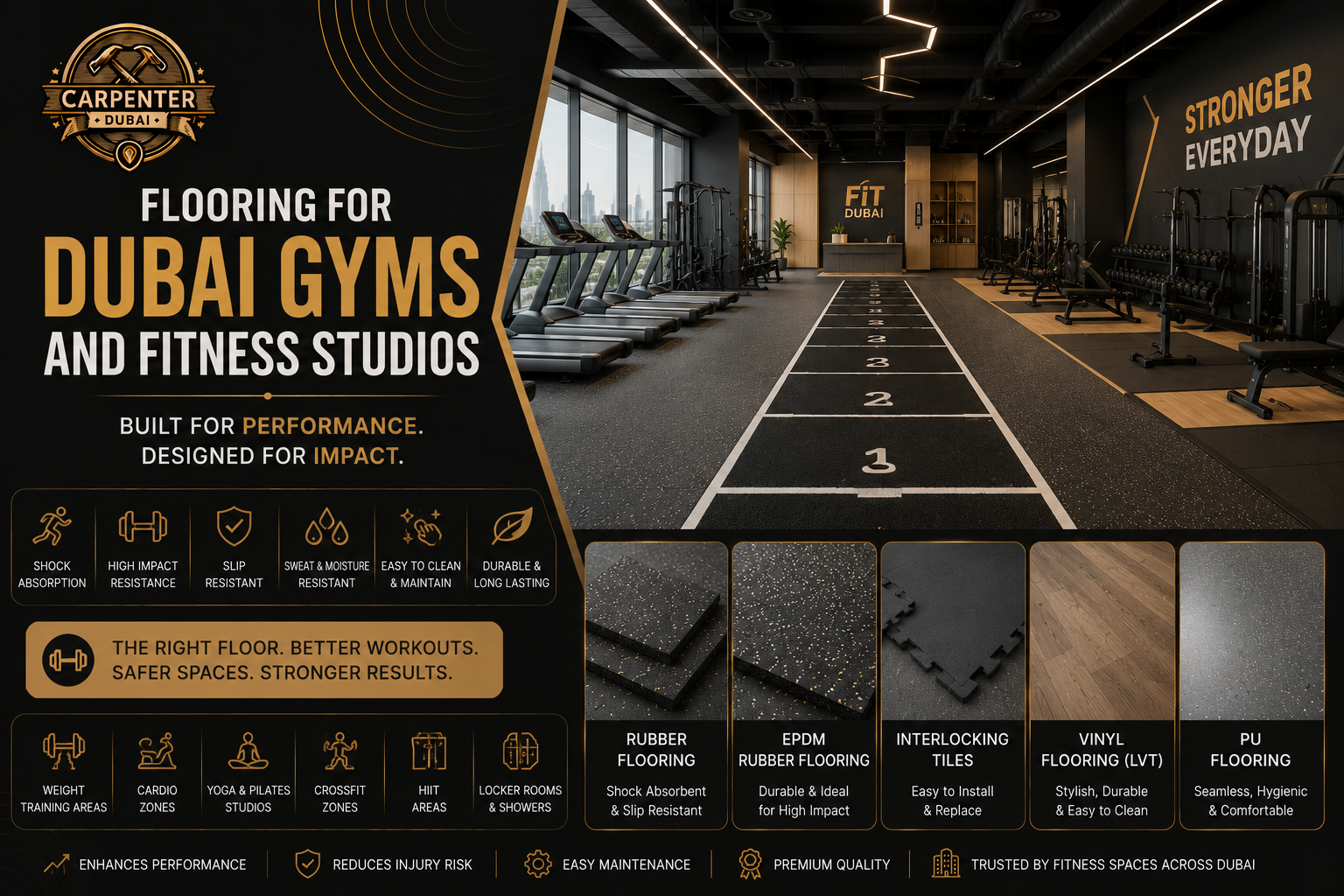
Why Rubber Flooring Is Standard for Free Weight Zones in Gyms
In high-intensity fitness environments such as gyms in Dubai, rubber flooring is the industry standard for free weight zones because it is engineered to absorb repeated high-impact loads. Dropped dumbbells and barbells generate significant force, and rubber’s elastic structure disperses that energy, protecting both the subfloor and the equipment.
Rubber also provides essential slip resistance even when dust, chalk, or sweat is present. Its density helps reduce vibration transmission through the building structure, which is especially important in multi-level facilities where noise and impact can disturb adjacent spaces.
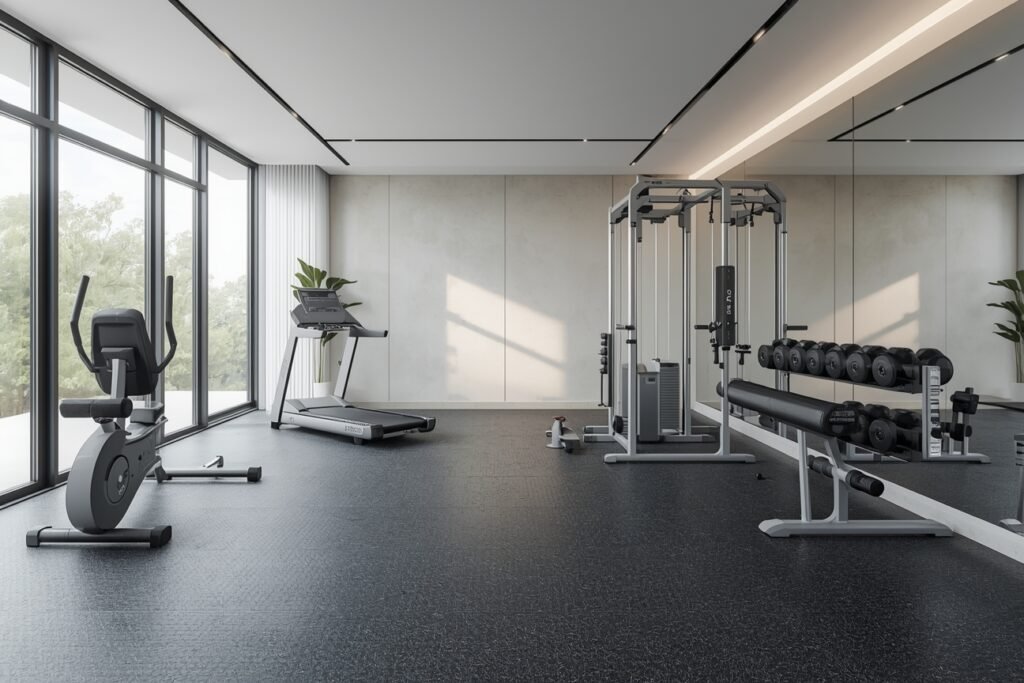
Shock-Absorbing Vinyl for Group Fitness and Aerobics Studios
Group fitness studios require flooring that balances comfort, resilience, and controlled movement response.
Shock-absorbing vinyl systems offer:
- Cushioned backing for joint protection during repetitive motion
- Stable surface grip for aerobic activities
- Easier cleaning compared to textile-based floors
- Moderate acoustic dampening
In fitness centers across Dubai, this type of flooring is commonly used in yoga, aerobics, and dance studios where impact is lower but comfort and hygiene are priorities.
How Moisture-Resistant Flooring Handles Sweat Spills in Hot Yoga
Hot yoga environments generate continuous moisture from both humidity and perspiration.
Moisture-resistant flooring must:
- Prevent water absorption into the substrate
- Maintain grip even when wet
- Resist microbial growth caused by warmth and moisture
- Allow fast drying between sessions
Seamless vinyl and rubber flooring are often preferred because they eliminate joints where moisture can accumulate, reducing hygiene risks and odor formation.
Acoustic Flooring for Spin Studios to Contain Loud Music
Spin studios combine loud music, rhythmic movement, and synchronized group activity, creating high acoustic intensity.
Acoustic flooring helps by:
- Absorbing vibration from stationary bikes
- Reducing low-frequency impact noise
- Limiting sound transmission to adjacent rooms
- Improving internal sound balance
In multi-use fitness centers in Dubai, acoustic underlayments are often combined with rubber or vinyl systems to contain noise within the studio envelope.
Slip Resistance for Flooring Near Water Stations and Showers
Water stations and shower-adjacent areas are high-risk slip zones in gyms.
Safe flooring must provide:
- High traction under wet conditions
- Rapid drainage or water dispersion
- Resistance to soap and cleaning agents
- Non-polished, textured finishes
These areas typically require higher slip-resistance ratings than dry workout zones due to frequent spills and barefoot traffic.
Antimicrobial Additives in Gym Flooring to Reduce Odor
Gym flooring is constantly exposed to sweat, moisture, and organic residues.
Antimicrobial additives help by:
- Inhibiting bacterial growth on the surface
- Reducing odor formation over time
- Supporting hygiene between cleaning cycles
While they improve surface hygiene, they are most effective when combined with regular cleaning protocols and good ventilation systems.
How to Match Flooring in Transition Zones Between Weight Area and Cardio
Transition zones between heavy lifting and cardio areas must balance durability with comfort.
Key design considerations include:
- Gradual change in material hardness (rubber → cushioned vinyl)
- Visual zoning using color or texture shifts
- Maintaining consistent floor height for safety
- Ensuring smooth movement of equipment
In fitness facilities across Dubai, these transitions also help define training zones without physical barriers.
Why Seamless PU Resin Is Preferred for Functional Training Zones
Seamless polyurethane (PU) resin flooring is widely used in functional training areas because it offers a continuous, joint-free surface.
Advantages include:
- High impact resistance for dynamic movements
- No seams where sweat or dirt can accumulate
- Easy sanitization after group sessions
- Long-term durability under varied training loads
This makes it ideal for CrossFit-style zones and multi-functional training areas.
Maintenance Schedule for High-Sweat, High-Traffic Gym Floors
Gym flooring maintenance depends on usage intensity, but typically includes:
- Daily cleaning: sweat removal, dust control, and disinfecting high-contact zones
- Weekly deep cleaning: removal of embedded grime and odor control
- Monthly inspection: checking seams, wear zones, and surface integrity
- Periodic resurfacing (rubber or PU systems): depending on wear level
In high-traffic gyms in Dubai, maintenance consistency is essential not just for appearance but for hygiene compliance and user safety.
Frequently Asked Questions
Can I use hardwood flooring for a Dubai gym?
Only for basketball courts; for weight training, rubber or vinyl is safer and more durable.
What’s the best flooring for hot yoga studios in Dubai?
Closed-cell vinyl sheet with moisture barrier; no grout or seams to trap sweat.
How to eliminate gym floor odor from sweat and bacteria?
Regular deep cleaning with enzyme-based cleaner; antimicrobial flooring helps prevent.
Is interlocking rubber tile suitable for heavy deadlift zones?
Yes, but choose thick, high-density tiles; rolled rubber is more seamless and durable.
How to protect gym flooring from dropped dumbbells?
Use rubber deadlift platforms or crash pads in designated heavy lifting zones.
Can I install flooring over existing gym mats?
No, remove old mats; install new flooring over clean, level concrete subfloor.
How often should gym rubber flooring be replaced?
High-quality vulcanized rubber lasts 15+ years; recycled rubber may need replacement sooner.
What flooring reflects light to make a small gym feel bigger?
Light-colored vinyl or polished concrete with high light reflectance value.
Does Dubai Sports Council regulate gym flooring?
Yes for safety and impact absorption in licensed commercial gyms.