Why Natural Stone Remains Preferred for Prayer Halls Over Synthetic
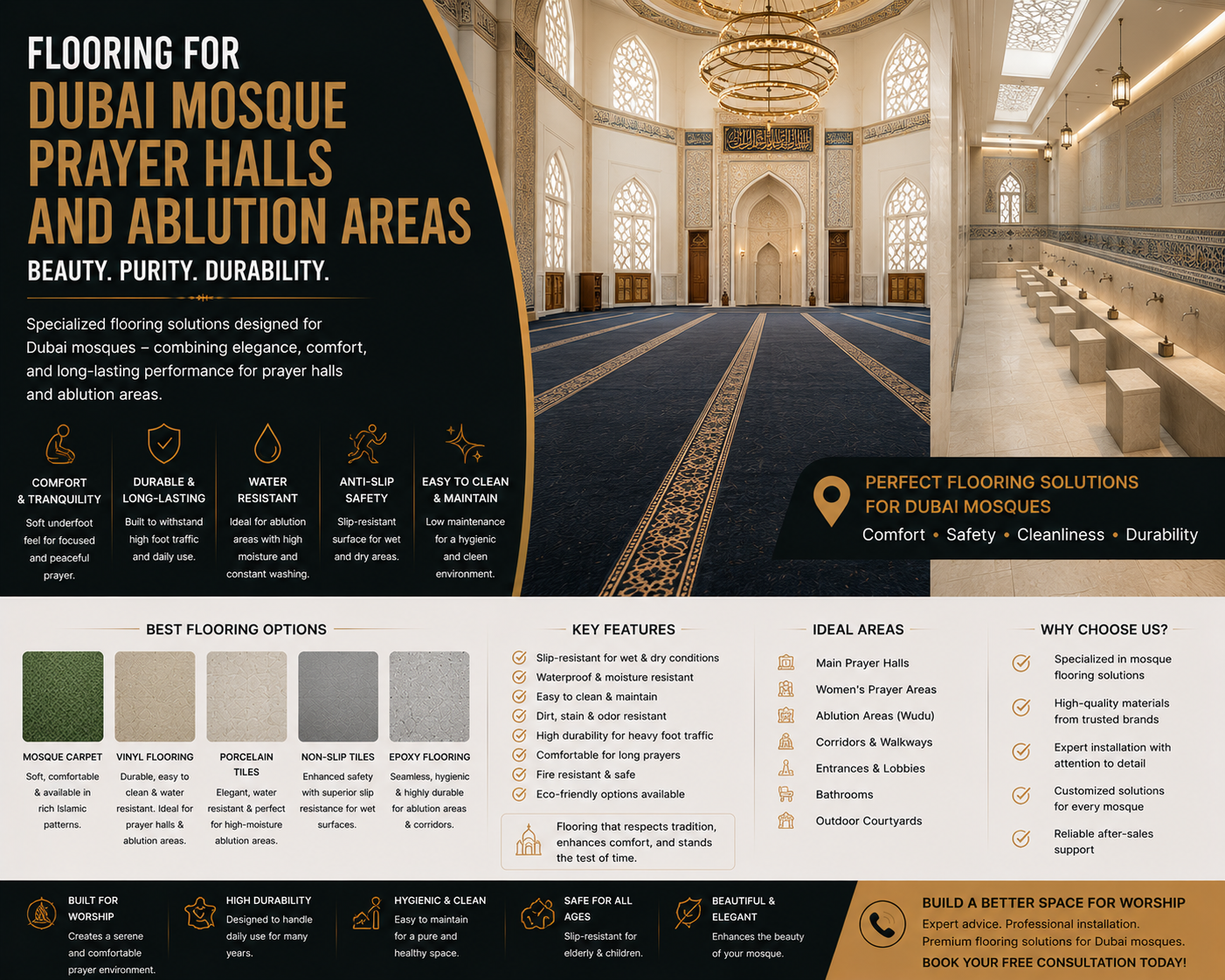
In large prayer halls in Dubai, natural stone remains a preferred flooring material because it aligns with both functional and cultural requirements. Stone provides a cool, stable surface under varying temperatures and maintains durability under extremely high foot traffic during peak prayer times.
Unlike many synthetic alternatives, natural stone does not deform under pressure and retains its finish over decades when properly maintained. It also offers a sense of permanence and architectural dignity that is important in religious spaces, where material authenticity and simplicity are valued.
Its thermal mass helps regulate surface temperature, which is especially beneficial in climates with significant heat variation between outdoor and indoor environments.
Ablution Area Flooring: Rapid Drainage and Anti-Slip Requirements
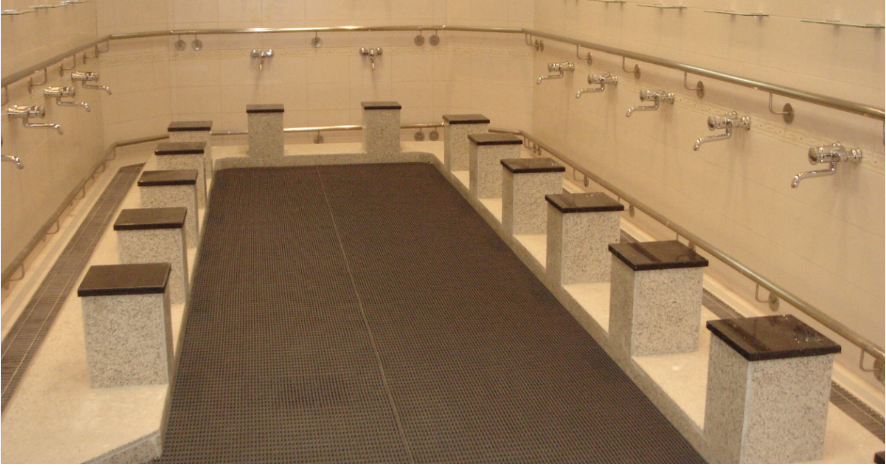
Ablution (wudu) areas require specialized flooring that can handle continuous water exposure while maintaining safety.
Key requirements include:
- High slip resistance even when fully wet
- Fast drainage to prevent standing water
- Resistance to soap, oils, and mineral deposits
- Easy-to-clean surface without joint buildup
Textured stone, anti-slip ceramic tiles, and engineered drainage slopes are commonly used to ensure both hygiene and safety in these wet zones.
Proper slope design is critical to ensure water flows efficiently toward drains without pooling in walking areas.
How to Reduce Echo in Large Prayer Halls with Acoustic Flooring
Large prayer halls often have high ceilings and hard surfaces, which can amplify echo and reduce speech clarity.
Acoustic improvement strategies include:
- Carpeted prayer zones with dense wool fibers
- Acoustic underlays beneath carpets
- Strategic wall paneling or soft finishes in select areas
In spaces such as mosques in Dubai, reducing reverberation is essential to ensure clarity during sermons and communal prayer, especially in larger congregations.
Transitioning from Wet Ablution Tiles to Dry Carpet Prayer Areas
One of the most critical flooring transitions in mosques is between ablution zones and prayer halls.
This transition must:
- Prevent water migration into carpeted areas
- Ensure a safe, non-slip boundary
- Maintain a clear separation between wet and dry zones
Common solutions include recessed threshold channels, raised transition strips, and moisture-absorbing entry mats. This ensures that prayer carpets remain dry, hygienic, and comfortable for worshippers.
Stain Resistance for Oils from Foreheads and Hands During Prostration
During prayer, repeated contact between the forehead, hands, and carpet can introduce natural skin oils and moisture.
Wool carpets are often preferred because they:
- Contain natural lanolin, which provides mild stain resistance
- Resist deep absorption of oils better than many synthetics
- Allow easier spot cleaning when maintained regularly
However, consistent cleaning schedules are still essential to preserve appearance in high-traffic prayer environments.
Maintenance Protocols for High-Traffic Prayer Hall Flooring
Prayer halls experience intense peak usage, especially during Fridays and religious holidays.
Maintenance typically includes:
- Daily vacuuming of carpeted areas
- Frequent spot cleaning in high-contact zones
- Regular deep cleaning cycles
- Periodic inspection of stone joints and grout in transition areas
In religious facilities across Dubai, maintenance is structured to preserve both hygiene and spiritual comfort.
Why Wool Carpet with Short Pile Is Preferred Over Synthetic in Mosques
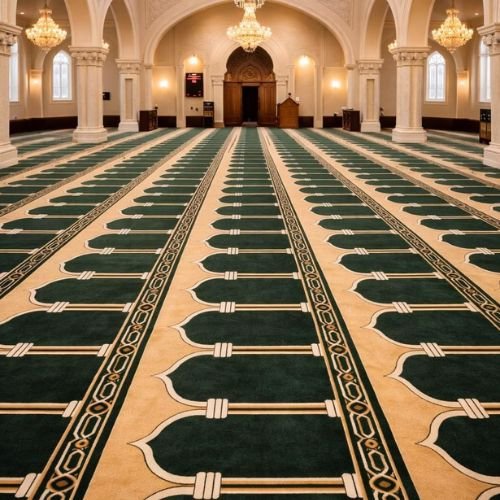
Short-pile wool carpets are widely used in prayer halls due to their balance of comfort, durability, and cleanliness.
Advantages include:
- Natural breathability and odor resistance
- Better resilience under repetitive foot traffic and kneeling
- Improved acoustic dampening
- Easier alignment and row definition for prayer lines
Compared to synthetic fibers, wool also provides a more natural tactile experience, which is important in religious environments.
How Floor Cooling Systems Work in Dubai Mosque Prayer Halls
In hot climates like Dubai, some modern mosques incorporate floor cooling systems to enhance comfort during large congregations.
These systems work by:
- Circulating chilled water through embedded piping
- Reducing surface temperature of stone or tile floors
- Enhancing thermal comfort during peak heat periods
Stone flooring is particularly effective in this context due to its high thermal conductivity and ability to distribute cooling evenly.
Traditional Geometric Inlays in Stone Flooring for Mosque Aesthetics
Geometric inlays are a defining feature of Islamic architectural flooring design.
These patterns:
- Guide spatial organization within large halls
- Reinforce symmetry and alignment for prayer rows
- Add cultural and visual identity without distraction
Materials such as contrasting marble, stone, or mother-of-pearl are often used to create intricate designs that enhance the spiritual and architectural atmosphere of mosques in Dubai.
Frequently Asked Questions
Can marble flooring be used in mosque ablution areas?
No, marble becomes slippery and stains; use textured porcelain or granite instead.
How often should mosque carpets be deep cleaned in Dubai?
Weekly vacuum; monthly hot water extraction; full replacement every 3-5 years.
What flooring prevents slipping during wudu (ablution)?
Porcelain tiles with R13 slip rating and sloped floors toward drains.
Is underfloor cooling better than AC for mosque prayer halls?
Yes, radiant cooling in floors is quieter and more energy-efficient for large spaces.
How to remove shoe polish stains from mosque entrance flooring?
Stone poultice for marble; for carpet, professional dry cleaning solvent only.
Can I install carpet over heated floors in a mosque?
Yes but only low-profile carpet; thick carpet insulates and reduces heating efficiency.
What’s the best flooring for mosque outdoor courtyards (sahn)?
Large-format porcelain pavers with R11 slip rating and light color for heat reflection.
How to maintain the shine of marble prayer hall floors without making them slippery?
Use matte or honed finish marble; high-gloss is dangerous for prostration.
Are there any Dubai-specific mosque flooring regulations?
Yes, Awqaf has guidelines for slip resistance, fire safety, and acoustic performance.